



Written by: Sara Childs, Executive Director of the Duke Forest
I had never been to the Adirondacks, and I knew nothing of its history – not the cultural, ecological, or geological. I was wowed by all of it. My very first stop on the trip, before arriving at Paul Smith’s College for the Eastern Research Forest Manager (ERFM) meeting was at the Adirondack Experience – The Museum on Blue Mountain Lake (ADX).
If you plan to visit this area of our country, I highly recommend stopping here. I came because I’m serving on an advisory committee for ADX as they update their “Work in the Woods” exhibit. While I spent most of my time there taking copious notes, I managed to glean some highlights from the other permanent collections housed in several beautiful, interesting buildings spread across the 100+ acre campus. All of them told rich and fascinating stories about the diverse peoples, past and present, of the Adirondacks. ADX gave me an unexpected and valuable opportunity to ground the rest of my visit in an appreciation and a basic understanding of the area’s history and culture.
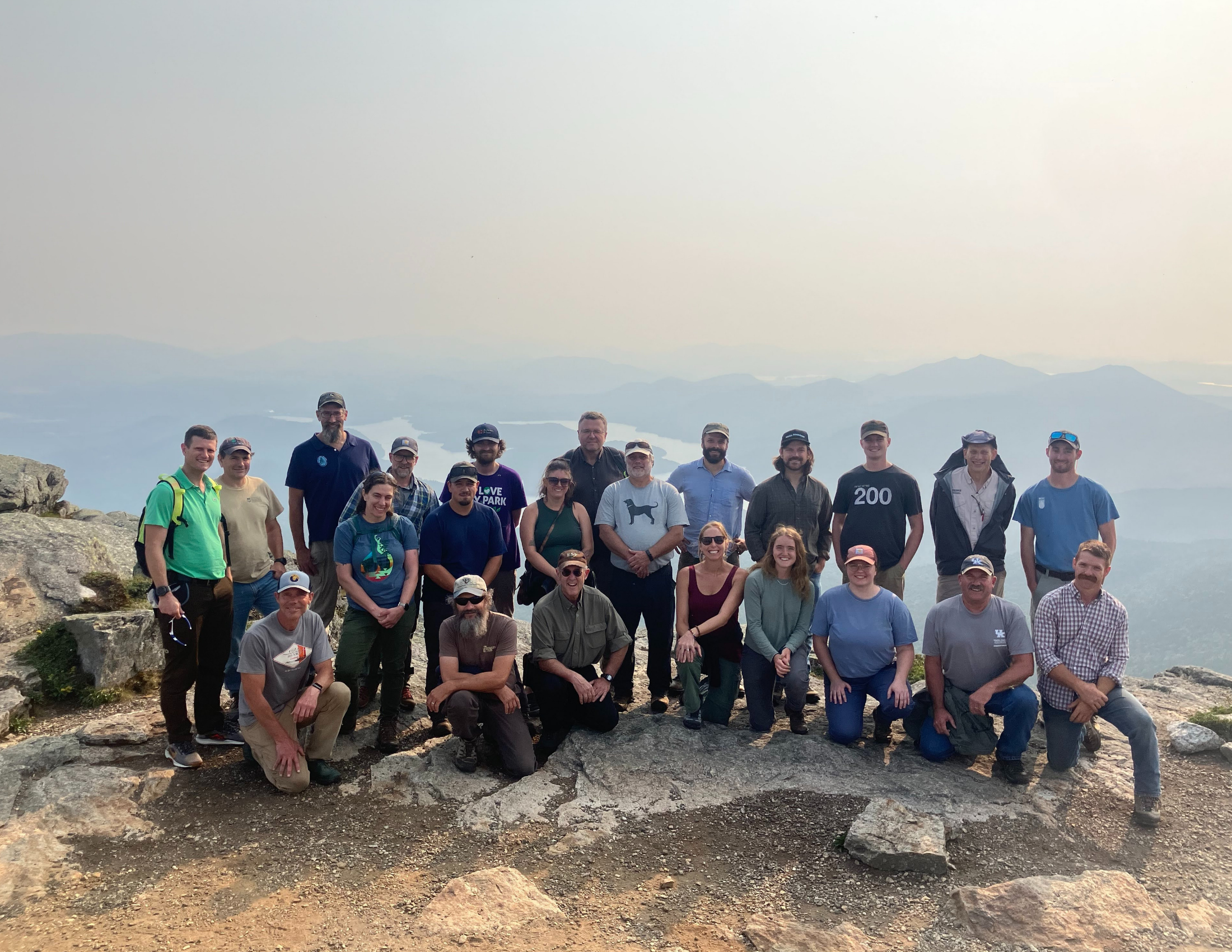
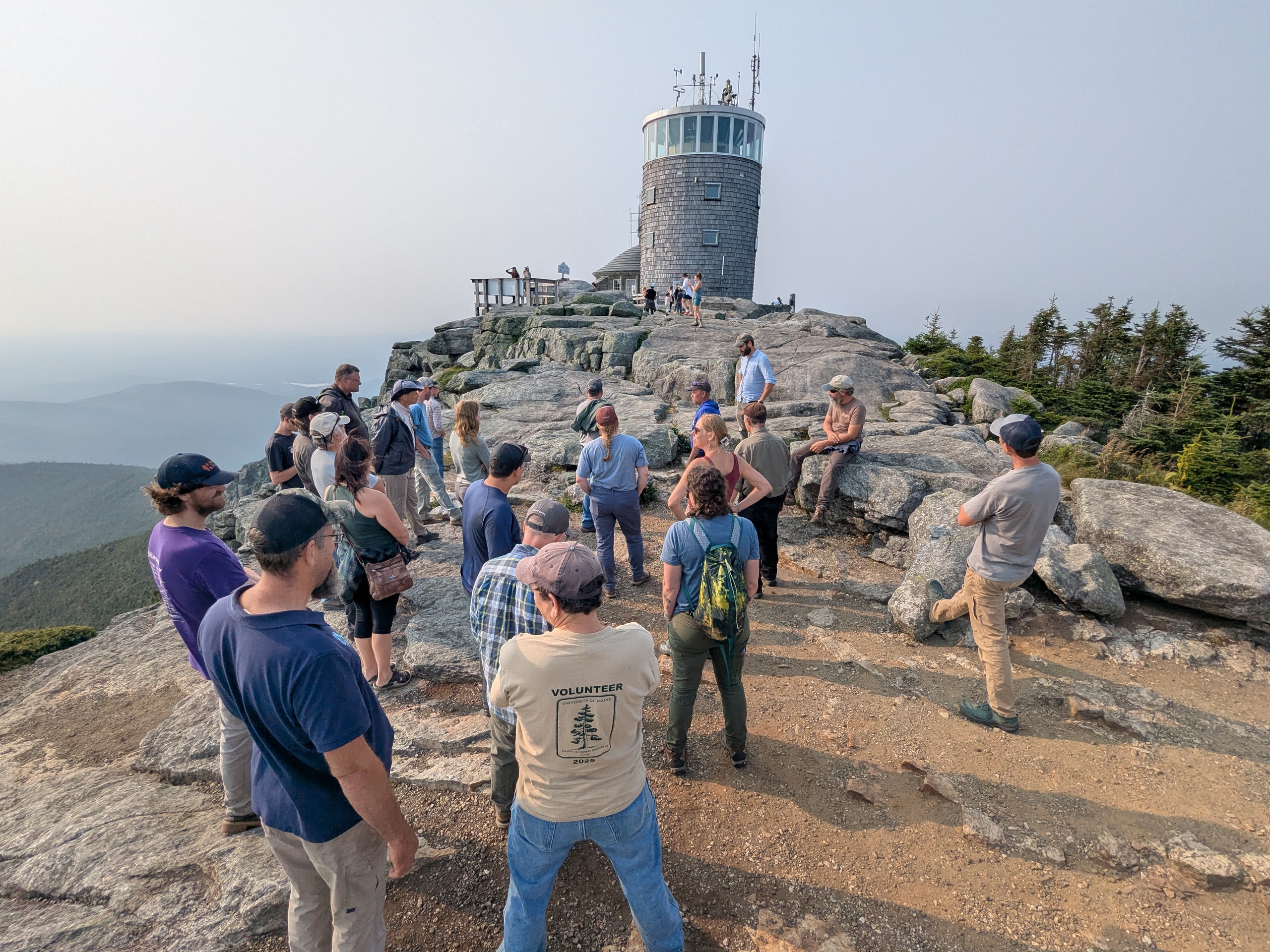
From ADX, I headed north to Paul Smith’s College, located along the shores of St. Regis Lake. I checked into my dorm and noted the twin bed with sheets that most closely resembled – in look and feel – the exam table paper at the doctor’s office. But alas, I’m not very picky, and after 12-hour days of touring around Paul Smith’s forest lands and other regional highlights – all while exchanging stories with 22 other university-based forest managers, I barely noticed.
John Foppert, Ph.D., a faculty member in Paul Smith’s SAF-accredited undergraduate degree program in forestry, as well as their forest manager, led our 3-day journey. He began by exploring the geologic underpinnings of the Adirondacks, which extend back 1.1 billion years. In the six million-acre Adirondack Park, the largest protected area in the Continental United States, the story is all about weather-resistant rock, glaciation (4 times!), and more recently (20 thousand years ago), a heat dome that’s literally pushing the mountains up day in and day out.
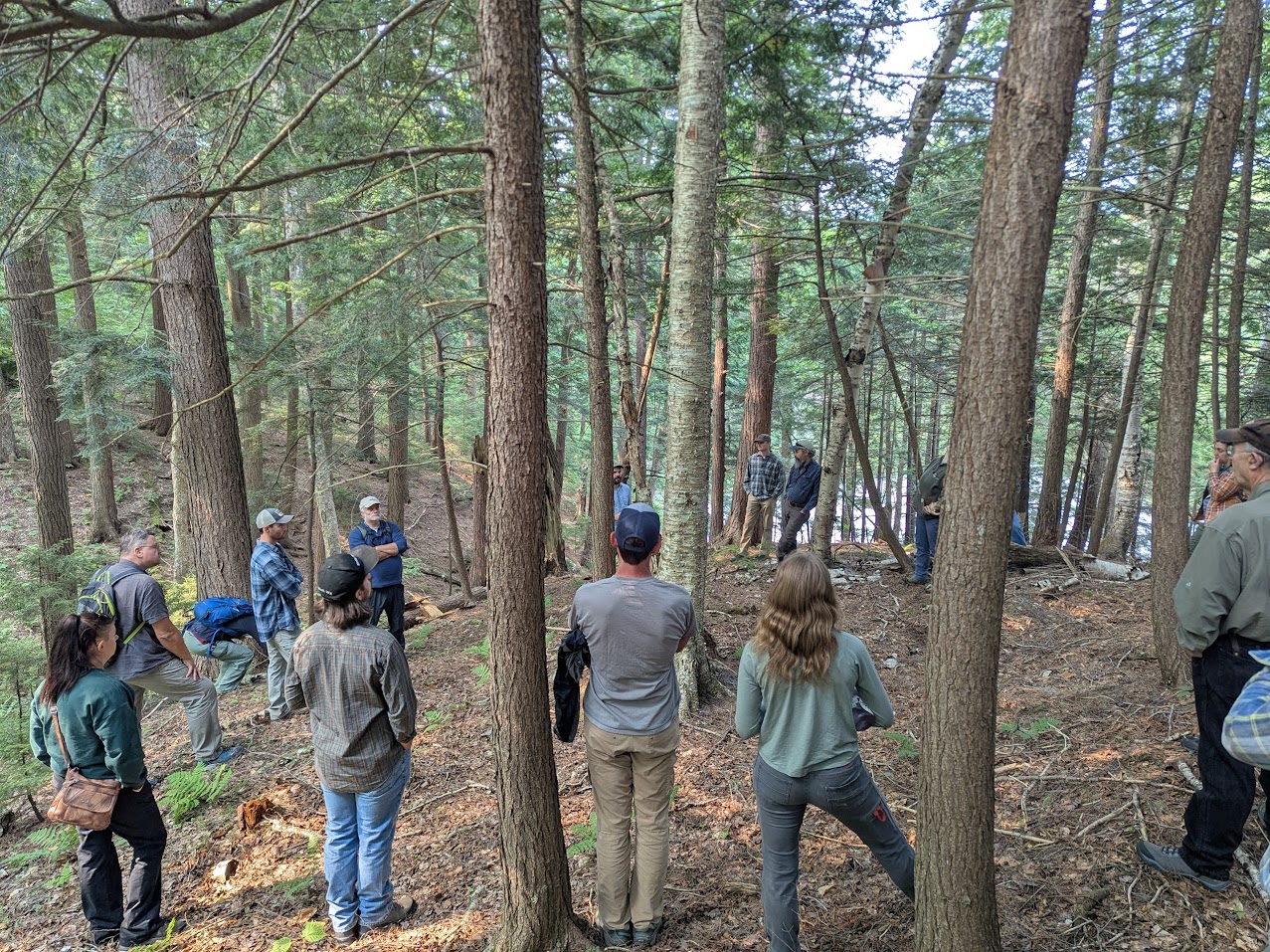
In general, these geologic processes have resulted in extremely sandy, acidic soils, which, of course, is one major driver of vegetation patterns. Speaking of vegetation, the dominant tree types include White Pine, Eastern Hemlock, Red and Black Spruce, Sugar Maple, Yellow Birch, and American Beech. Interestingly, the Emerald Ash Borer has yet to arrive and decimate their White Ash; however, the Beech here suffer from Beech Bark Disease, an unsightly and deadly disease caused by an invasive scale insect and associated fungi. This is a forest health problem we here in the North Carolina Piedmont are lucky, so far, to be spared.
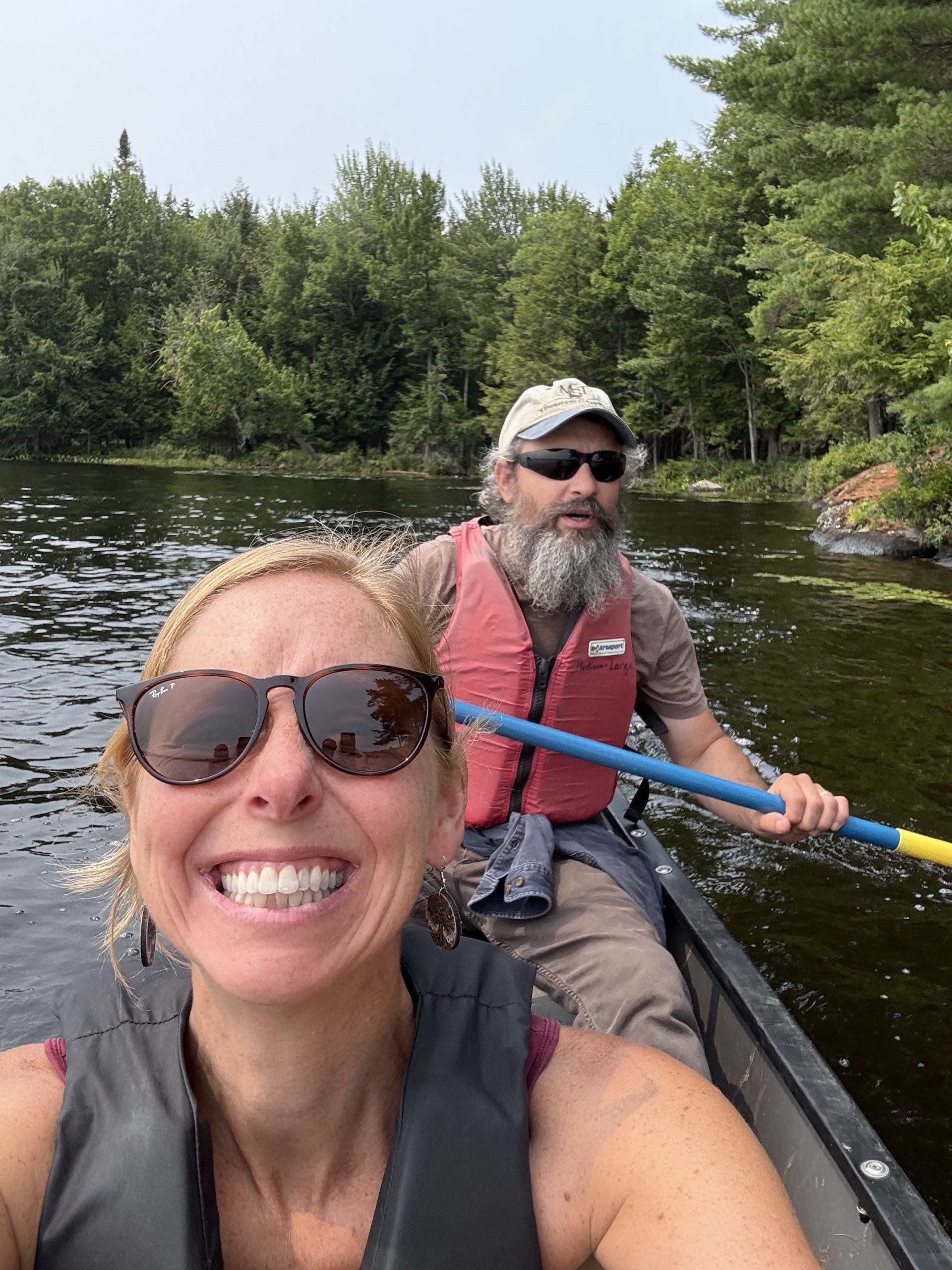
After acclimating to the geologic history and its implications for the region’s forests, we canoed across St. Regis Lake to begin our knowledge trek into the rich cultural heritage of the area. We began with a peek into the Indigenous histories in the Adirondacks, which center on the Mohawk and Abenaki peoples, whose presence and cultures remain a vibrant part of the region. We then headed to the home and grave of the famous abolitionist, John Brown, and from this historic site, we could see the perilous ski jumps featured in the 1980 Winter Olympics in Lake Placid.
The next day, we found ourselves sweetly settled into Paul Smith’s 60-acre, 2,000-tap Sugarbush operation, where we discussed the forestry practices (or lack thereof) around maple syrup production. My fellow managers and I queried AJ, the operations forester on-site, about the interesting equipment and the sophisticated process that unfolds in the sugar house in order to create that beautiful, sweet Grade A Amber that Americans love on their pancakes!
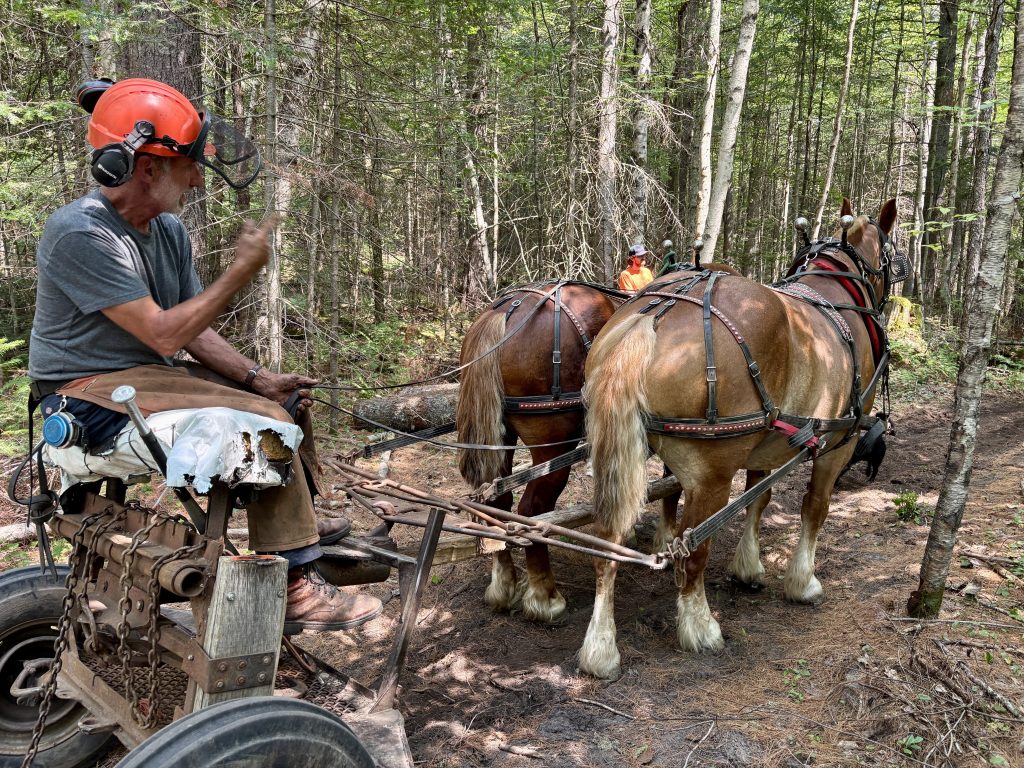
With some syrup samples stashed in our packs, we headed out to meet Jim, a horse logging legend, and yes, star of his own YouTube channel all about the lost art of horse-based logging and farming. Bill and Baron, his draft horses, were an impressive, voice-commanded pair, and I was lucky enough to get a chance to drive them a short distance while they pulled a log. Horse loggers, when available, are terrific at maneuvering through a stand with less residual impact than typical heavy equipment, so they are ideal for precise harvest operations like selective thinnings.
When we moved on to some larger harvest areas with higher removals, our discussion turned to the subject of how to train forest management and forestry students. We discussed the need to teach conceptual foundations alongside stand histories all while providing opportunities to practice the physical, technical forestry work. Many of us that teach feel challenged to effectively deliver all three components in a way that allows students to develop solid technical skills while cultivating their own intuition and wisdom from the stand to the forest level.
For me and my role in a professional forestry and natural resources management program, the conversations reinforced the critical importance of the co-curricular and extra-curricular experiences students can participate in. Internships, assistantships, work-study, and early-career mentorship-based programs are especially crucial for students with career ambitions to be on-the-ground as foresters or forest managers. These opportunities offer the repetition, and critically, the necessary feedback to practice and improve, which cannot always be achieved in a single semester class. While class and field-based coursework provide a foundation from which to build, it’s these opportunities for long hours in the field that develop students’ competence and confidence as professionals.
As you might imagine, some of the most insightful, thoughtful, and hilarious conversations happened in the vans as we rode around to different sites or toasted beers at the brewery to wrap the day. We always refer to ERFM as our professional support group, and for good reasons; university forest managers face a unique set of challenges and concerns across scope and scale.
For example, anyone who has worked in land management knows that you basically have to earn an honorary degree in property law to be successful. Especially when you’re lucky enough to manage lands with a long history of tenure, such as my dear friend and colleague Keith Kanoti from the University of Maine. He had me laughing in tears while he one-upped my story around the difficulty of interpreting old deeds by sharing a deed reference for a forest property in Maine that begins:
“At the point of the beginning is the stump where Filo Blake shot the bear…”
If that doesn’t make you smirk, ERFM may not be the right support group for you, and that’s OK. It is for me, and I’m so proud to be part of this group of hard-working, passionately dedicated, clever, and creative friends whose life’s work is to steward and share the incredible benefits that our university forests across the U.S. provide for teaching, research, conservation, and community.
May the Forests be with you!
— Sara