



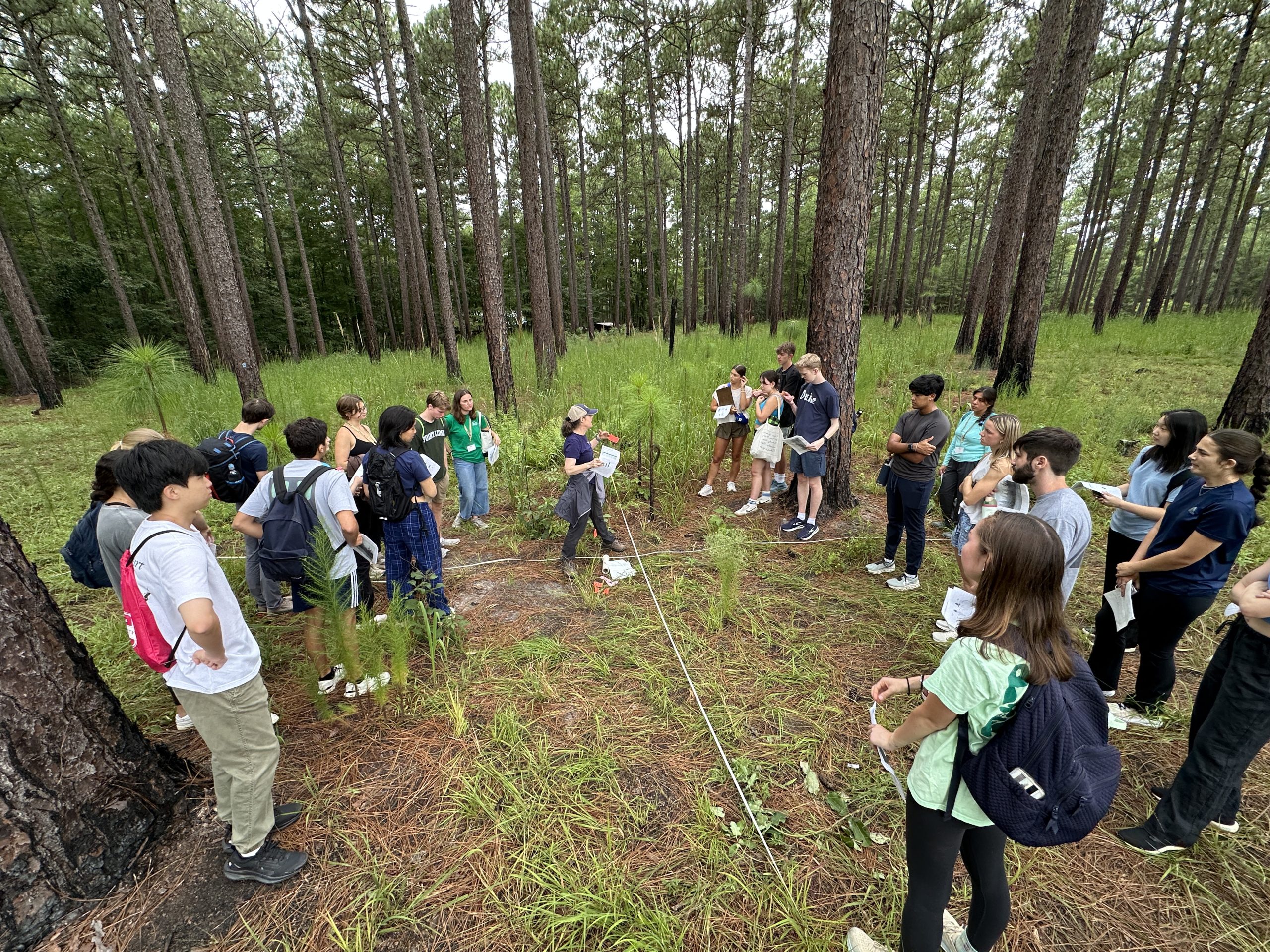
The week before classes started, the Duke Forest hosted three First-Year Experiential Orientation groups. Before these new Duke students arrive on campus, they choose from dozens of orientation options based on their interests and passions. This year, the Duke Forest hosted Project Global, Project Herd, and Project Earth, which all shared a focus across conservation, climate, and wildlife. Based on these themes, Duke Forest staff created a series of hands-on experiences.
Herp Community Science volunteers led students to collect data at a herpetofauna transect while discussing the importance of amphibians and reptiles as indicators of climate change. Our Assistant Director of Teaching and Research instructed students on how to collect regeneration data in a 90-year-old Longleaf Pine plot and taught them how demographic studies of plants help us understand and predict changes in forest ecosystems. Guided by our summer intern, Chloe Daniel, they also collected caterpillars and insects and learned about the importance of monitoring pollinators. Duke Forest staff also highlighted international research projects occurring at the site, as well as forest management strategies, such as sustainable timber production and the use of prescribed fire to manage healthy forests.
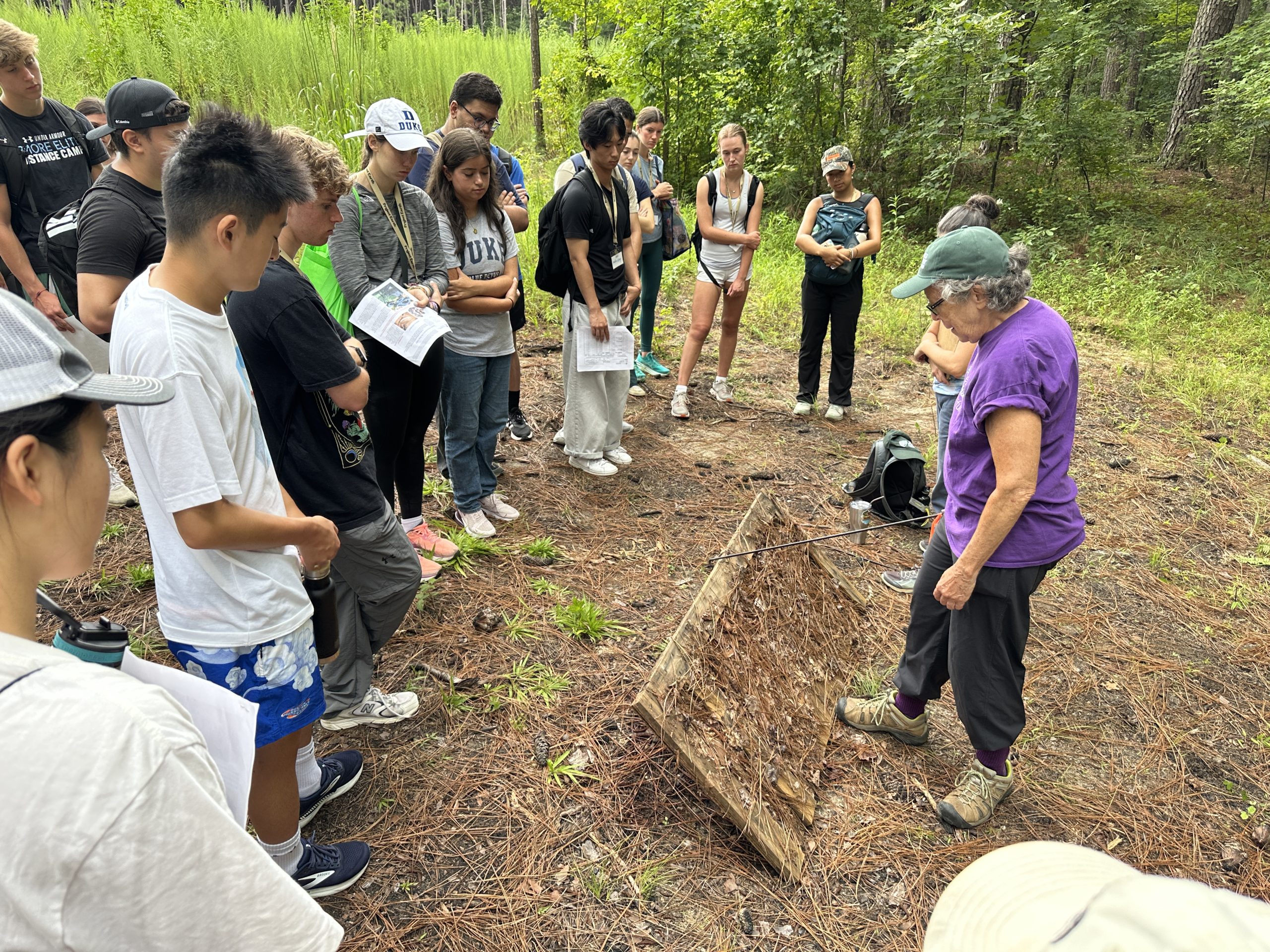
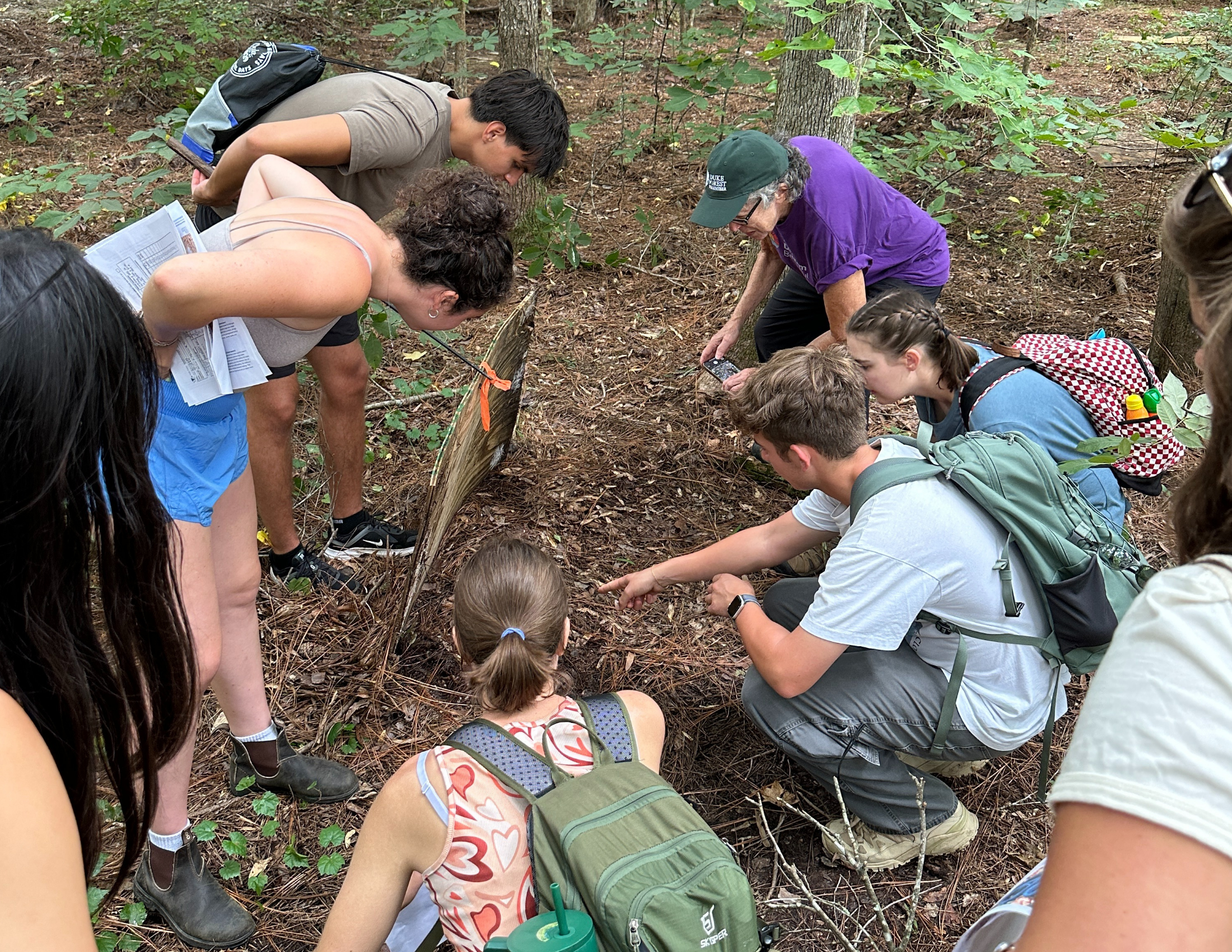
In many ways, this was a first for the Duke Forest! We host various education and outreach events, but with a small staff, our capacity to host large groups is limited. However, with some creative thinking, incredible support from our Forest volunteers, and capacity provided by our awesome undergraduate summer intern, we were able to engage 300 undergraduate students during Orientation Week! For some students, this may be their only visit to the Forest, but for many, these Orientation Week visits are just the beginning as they learn the many ways they can engage with the Forest while at Duke. And for the Duke Forest, we proved to ourselves that with careful planning and a little help from our friends, we can expand our impact on student engagement and learning.